RV 12V power help for better camping
Choose the right battery, inverter, converter, and solar charging setup for your RV—without guesswork. Volt Resources turns confusing 12-volt decisions into practical checklists and calculations.
Start with the system you actually need
Batteries
Compare lead-acid and LiFePO4 capacity, usable energy, charging limits, and fit before you buy.
Inverters
Size pure sine inverters for continuous watts, startup surge, wiring, and the devices you use off-grid.
Converters & solar
Understand 12V charging, solar controllers, shore power, and how the pieces work together safely.
A clear, safety-first approach
We focus on real-world RV use: overnight energy, weather, charging time, battery chemistry, and honest limitations. Product examples are selected for comparison, not hype. Always follow manufacturer instructions and use a qualified RV electrician for installation.
How to install (wiring overview)
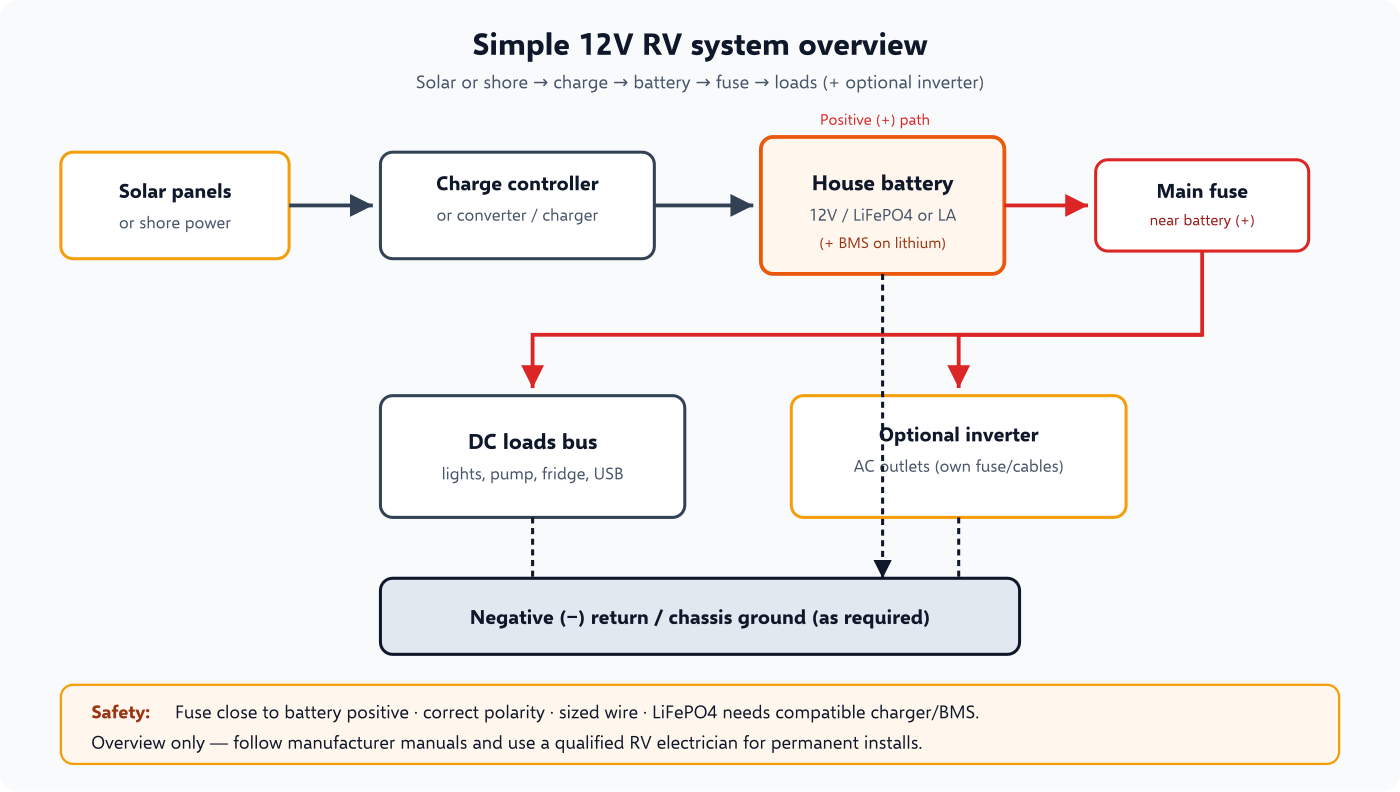
Before you buy parts or open a panel, it helps to see how a basic 12V RV system fits together: charging sources feed the house battery through a controller or converter; a main fuse near the battery positive protects the wiring; then power reaches DC loads and an optional inverter branch. The diagram below is a beginner orientation—not a wire-by-wire blueprint.
⚠ Safety first — read before any electrical work
Working on RV electrical systems can cause shock, fire, or equipment damage. If you are unsure at any step, stop and hire a qualified RV technician or electrician.
- ALWAYS disconnect shore power first — unplug the shore cord and turn off / remove it from the pedestal before opening panels, converters, inverters, or battery compartments.
- Also disconnect or isolate the battery bank (use the battery disconnect) before working on DC wiring. Wait for capacitors to discharge if applicable, then verify with a multimeter that circuits are dead.
- Never work on wet surfaces. Use insulated tools. Respect polarity. Place a correctly rated fuse near the battery positive.
- Identify every charging source (shore/converter, solar controller, alternator/DC-DC) before adding loads.
- Size the main fuse and cable for the highest continuous current on that run.
- Keep positive and negative polarity consistent; label chemistry and charger settings.
- Have permanent wiring inspected or installed by a qualified RV technician when you are not fully confident.
Next useful reads
Best RV Lithium Batteries: Buyer’s Guide · RV Inverter Size Guide